
hashimrizwan.com

Author name: hashimriswanofficial@gmail.com

Uncategorized

SEO: Turning Online Searches Into Business Opportunities

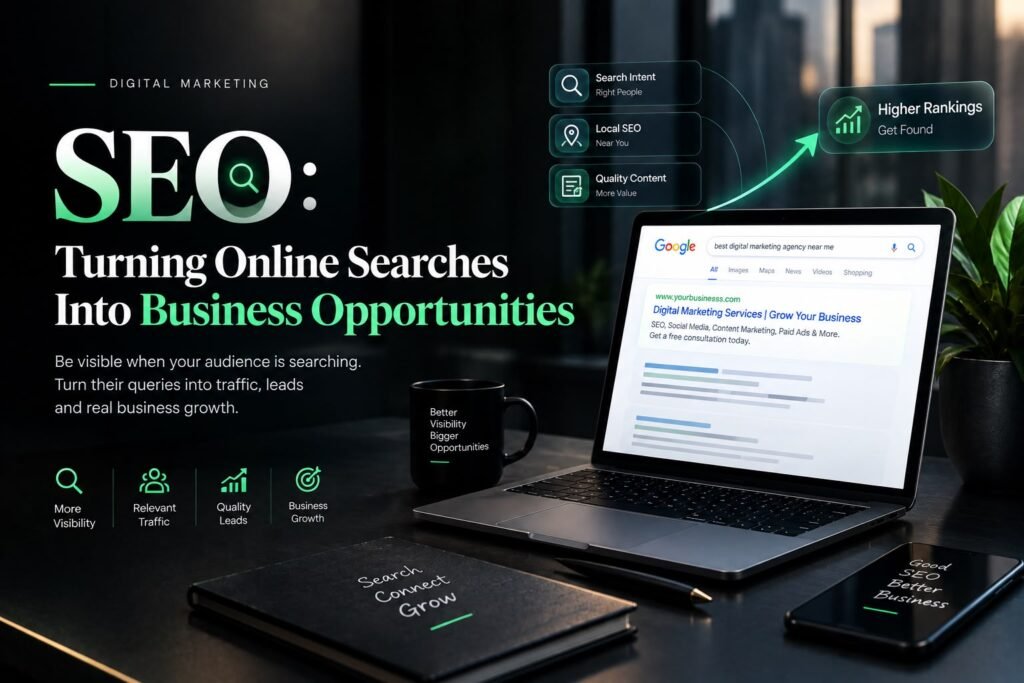
SEO: Turning Online Searches Into Business Opportunities Every day, people search online for products, services, information, solutions, and businesses they can trust. A customer looking for a service may begin with a simple search, compare several websites, read reviews, explore social media, and eventually decide which business deserves their attention. This creates a powerful opportunity for businesses. Search Engine Optimisation, or SEO, helps businesses become visible when potential customers are actively searching for what they offer. But SEO is more than simply ranking a website on Google. When approached strategically, it can become a long-term business growth channel — bringing relevant traffic, building credibility, generating enquiries, and creating opportunities for meaningful conversions. What Is SEO? SEO is the process of improving a website and its content so that search engines can better understand, evaluate, and present it to users. Search engines aim to provide users with the most useful and relevant results. SEO helps businesses communicate their relevance through high-quality content, appropriate keywords, technical website optimisation, user experience, and other factors. The objective is simple: Be visible when the right customer is looking for the right solution. Instead of interrupting someone with an advertisement, SEO allows businesses to appear naturally when there is already an existing search intent. Why Search Visibility Matters Imagine someone searching for a service that your business provides. If your website appears prominently in the search results, you have an opportunity to introduce your brand to a potential customer. If your business does not appear, that opportunity may go to a competitor. This is why search visibility matters. Customers often use search engines at different stages of their decision-making process. They may search for general information first, compare available options later, and eventually search for a specific service or brand. A strong SEO strategy helps a business remain visible throughout this journey. SEO Attracts Intent-Driven Traffic One of the most valuable aspects of SEO is search intent. Someone who searches for “what is digital marketing” may simply be looking for information. Someone searching for “digital marketing agency near me” has a much stronger commercial intent. Understanding this difference allows businesses to create content for different stages of the customer journey. SEO is therefore not about attracting as many visitors as possible. It is about attracting the right visitors. Relevant traffic has a greater potential to become an enquiry, customer, subscriber, or long-term brand connection. The Role of Keywords Keywords are an important part of SEO because they help connect what people search for with the content a business provides. However, modern SEO is not about repeatedly placing the same keyword throughout a page. Effective keyword strategy begins with understanding what your audience is actually searching for. Businesses should consider: When content is created around genuine search behaviour, it becomes more useful to both users and search engines. Content Is the Foundation of SEO A technically optimised website is important, but valuable content is what gives people a reason to visit and stay. Blogs, service pages, guides, case studies, FAQs, and educational resources can all contribute to a strong SEO strategy. Good content should answer questions clearly, demonstrate expertise, and provide genuine value. Instead of creating content simply because a keyword has search volume, businesses should ask: “Does this content genuinely help my potential customer?” When the answer is yes, SEO becomes more than a ranking exercise. It becomes a way of building trust. Website Experience Matters SEO does not exist separately from the user experience. A website may attract visitors through search, but if it is slow, confusing, difficult to navigate, or poorly designed, those visitors may leave without taking action. A professional SEO strategy therefore considers elements such as: The goal is not simply to bring people to a website. The goal is to give them a reason to stay. Local SEO and Business Growth For businesses serving a specific city, region, or local community, local SEO can be particularly valuable. People frequently search for businesses based on their location, such as services “near me” or within a particular city. A strong local SEO presence can help businesses improve their visibility among nearby customers who are actively looking for their services. For local businesses, factors such as accurate business information, location-focused content, customer reviews, and a well-optimised online presence can contribute to stronger local visibility. SEO Builds Long-Term Brand Authority Paid advertising can provide immediate visibility, but SEO has the potential to create lasting organic presence. When a website consistently publishes valuable content and provides a strong user experience, it can gradually build authority within its industry. Over time, appearing consistently in relevant searches can also increase brand familiarity. A person may not become a customer the first time they see your business. But repeated exposure can create recognition — and recognition can eventually develop into trust. This makes SEO a powerful part of long-term brand building. Measuring SEO Success SEO success should not be measured only by rankings. A professional SEO strategy looks at the bigger picture. Important indicators can include: The ultimate question is not simply: “Did we rank?” It is: “Did our visibility create meaningful business value?” This shift in perspective helps businesses focus on outcomes rather than vanity metrics. SEO Is an Investment, Not a Shortcut One of the biggest misconceptions about SEO is expecting instant results. SEO is generally a long-term process. It requires research, content development, technical improvements, optimisation, monitoring, and continuous refinement. Search engines constantly evolve, competitors continue creating content, and customer behaviour changes over time. That is why successful SEO requires consistency. The businesses that approach SEO as an ongoing investment are better positioned to build sustainable search visibility and long-term digital value. Turning Searches Into Opportunities Every search represents a question, a need, a problem, or an intention. For businesses, that search can represent an opportunity. The role of SEO is to connect those moments of intent with the right information, service, or solution. When strategy, content, technical optimisation, user experience, and business goals work
Uncategorized

Building a Digital Marketing Strategy That Delivers Results

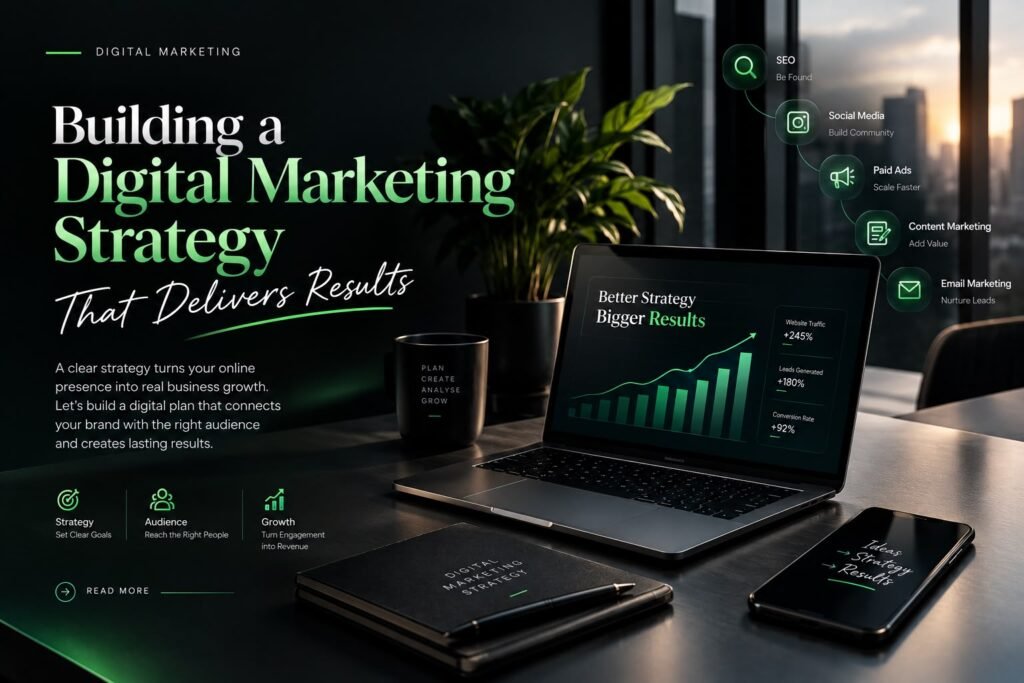
Building a Digital Marketing Strategy That Delivers Results Digital marketing can open powerful opportunities for businesses, but simply being active online does not guarantee success. Posting regularly, running advertisements, or creating social media accounts is only one part of the process. Real digital growth comes from having a clear strategy that connects every marketing activity to a specific business objective. A successful digital marketing strategy is not about doing everything at once. It is about understanding who you want to reach, what you want to achieve, how you want to communicate, and how you will measure success. When these elements work together, digital marketing becomes more than online promotion. It becomes a structured system for building visibility, trust, engagement, and sustainable business growth. Start With Clear Business Goals Every effective marketing strategy begins with a clear understanding of what the business wants to achieve. Your objective could be increasing brand awareness, generating leads, improving website traffic, building an online community, increasing sales, or establishing a stronger position within your industry. Without clear goals, it becomes difficult to know whether your marketing efforts are actually delivering value. For example, a business focused on generating enquiries may need a different strategy from a brand that is primarily trying to build awareness. The platforms, content, advertising approach, and performance metrics can all change depending on the objective. A simple principle is: Define the destination before choosing the route. Understand Your Target Audience A strategy becomes powerful when it is built around the right audience. Before creating content or launching campaigns, businesses should understand their potential customers — their interests, challenges, needs, preferences, and online behaviour. Ask important questions: Understanding your audience allows you to create communication that feels relevant rather than generic. The goal is not to reach everyone. The goal is to reach the right people with the right message. Build a Strong Brand Foundation Digital marketing becomes more effective when the brand behind it has a clear identity. Your visual style, messaging, tone of communication, website, social media presence, and content should feel connected. Consistency helps customers recognise your business and develop familiarity with it. A strong brand does not only communicate what a company sells. It communicates what the company represents. This is why branding and digital marketing should not be treated as completely separate activities. Every interaction with your audience contributes to how they perceive your business. Choose the Right Digital Channels One of the common mistakes businesses make is trying to be present on every platform. Being everywhere is not necessarily the same as being effective. The right digital channels depend on your audience and objectives. For some businesses, SEO and Google search may be essential. Others may benefit more from Instagram, LinkedIn, YouTube, email marketing, or paid advertising. Instead of asking, “Which platform is popular?”, ask: “Where is my audience, and where can my brand create the most value?” This approach helps businesses focus their time and resources on channels that actually support their goals. Create Content With a Purpose Content is at the centre of modern digital marketing, but creating content without direction can quickly become repetitive and ineffective. Every piece of content should have a purpose. It could educate your audience, solve a problem, demonstrate expertise, build trust, introduce your brand, generate engagement, or encourage an action. A strong content strategy can include: The objective is not simply to publish more. Create content that gives people a reason to stop, learn, engage, and remember your brand. Use SEO to Build Long-Term Visibility Search Engine Optimisation plays an important role in creating sustainable digital visibility. People are constantly searching online for information, products, services, and solutions. A well-optimised website and valuable content can help businesses become more visible when potential customers are actively looking for what they offer. SEO should be viewed as a long-term investment rather than a quick marketing trick. Strong SEO combines relevant keywords, useful content, technical website quality, good user experience, and consistent optimisation. When done correctly, it can help businesses attract relevant organic traffic and create opportunities without depending entirely on paid advertising. Combine Organic and Paid Marketing Organic marketing and paid advertising can work together to create a stronger digital ecosystem. Organic content helps build credibility, relationships, and long-term visibility. Paid campaigns can provide targeted reach and accelerate specific business objectives. For example, a business may use organic content to establish expertise while using paid campaigns to promote a specific service, offer, or landing page. The key is not simply spending more on advertising. The key is making every marketing investment intentional. Measure What Matters One of the biggest advantages of digital marketing is the ability to measure performance. Businesses can track website visitors, engagement, leads, conversions, campaign performance, search visibility, and other relevant metrics. However, numbers only become useful when they are connected to business goals. A high number of views may look impressive, but if those views do not contribute to meaningful engagement, enquiries, or conversions, they may not represent real business growth. Successful marketers look beyond surface-level metrics and focus on the numbers that actually matter. Optimise, Adapt, and Improve A digital marketing strategy should never be considered completely finished. Digital platforms change. Customer behaviour evolves. New competitors appear. Trends develop. What works today may not deliver the same results tomorrow. This is why continuous optimisation is essential. Analyse your performance, identify what is working, understand what is not, and make informed adjustments. The process is simple: Plan → Execute → Measure → Learn → Optimise → Repeat. This mindset transforms digital marketing from a one-time campaign into an ongoing growth system. Turning Strategy Into Sustainable Growth A powerful digital marketing strategy is ultimately about creating connections between a business and its audience. It brings together strategy, branding, content, SEO, social media, advertising, analytics, and customer experience under one clear direction. The strongest strategies are not necessarily the most complicated. They are the ones that understand the business, respect the audience, communicate a clear value proposition,

Uncategorized

Why Digital Marketing Matters for Modern Businesses

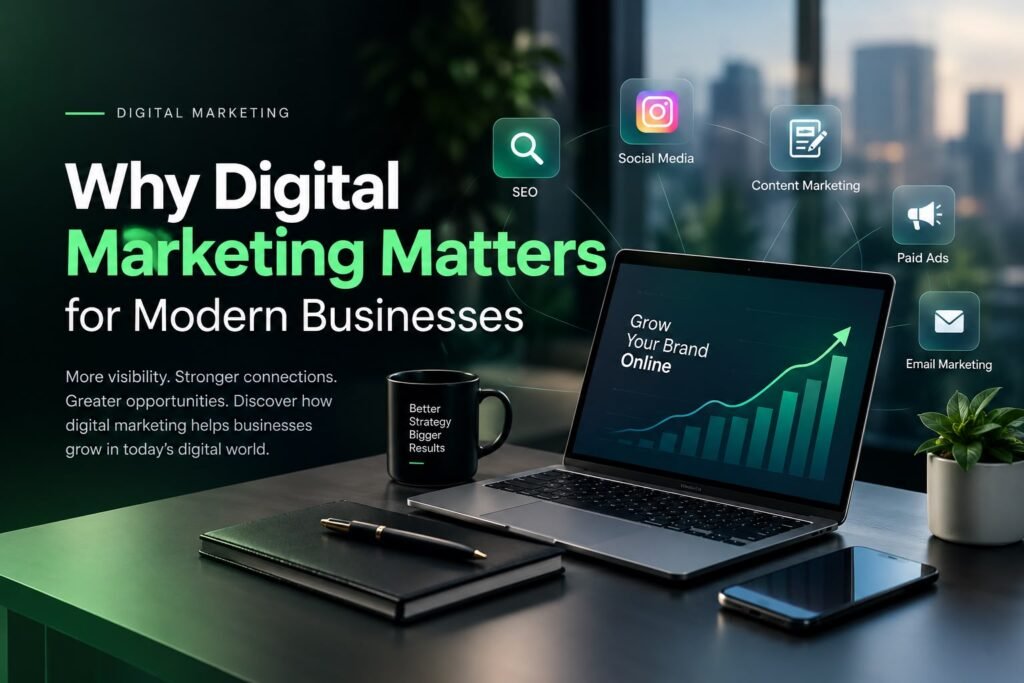
Why Digital Marketing Matters for Modern Businesses In a world where people discover brands, compare products, read reviews, and make purchasing decisions online, having a strong digital presence has become an essential part of modern business. Customers are no longer limited to traditional advertisements or physical storefronts when deciding where to spend their time and money. They search, explore, compare, and connect through digital platforms every day. This is where digital marketing plays a powerful role. Digital marketing is not simply about posting on social media or running advertisements. It is a strategic approach to building visibility, connecting with the right audience, creating trust, and turning attention into meaningful business opportunities. For businesses of every size, a well-planned digital marketing strategy can create a stronger and more sustainable path to growth. The Digital Transformation of Business The way businesses communicate with customers has changed dramatically. Traditional marketing methods still have their place, but digital platforms have introduced new opportunities to reach people with greater precision. A potential customer can discover a business through a Google search, watch its Instagram content, visit its website, read customer reviews, and make an enquiry — all within a short period of time. This creates an important opportunity for businesses: being present at the right moment, in the right place, with the right message. A professional digital presence allows a business to remain visible even when its physical location is closed. Your website, content, search presence, and social media profiles can continue communicating your brand values and services around the clock. Building a Strong Online Presence A strong online presence is more than having a website or social media account. It is about creating a consistent digital identity that represents what your business stands for. Your website should communicate your services clearly. Your social media should reflect your brand personality. Your content should provide value. Your search presence should make it easy for potential customers to find you. When these elements work together, they create a unified brand experience. For modern businesses, this consistency can make the difference between simply being visible and actually being remembered. Reaching the Right Audience One of the greatest advantages of digital marketing is the ability to communicate with a specific audience. Traditional advertising often reaches a broad group of people, but digital marketing allows businesses to understand who their potential customers are, what they are interested in, what problems they are trying to solve, and how they interact with brands online. With the right strategy, businesses can create content and campaigns designed around specific customer needs. This approach makes marketing more relevant and meaningful. Instead of trying to speak to everyone, a brand can focus on the people who are most likely to value its products or services. The Power of Content Marketing Content has become one of the strongest assets in digital marketing. A business can use blogs, videos, social media posts, educational content, graphics, case studies, and other formats to communicate its expertise and build relationships with its audience. Good content does not constantly ask customers to buy. Instead, it answers questions, solves problems, provides insights, and creates value. Over time, this approach can build credibility. When people consistently find useful information from a brand, they are more likely to recognise that brand as knowledgeable and trustworthy. This is why content marketing is not just about creating more posts — it is about creating the right content with a clear purpose. SEO and Long-Term Visibility Search Engine Optimisation, or SEO, is another important part of modern digital marketing. When someone searches for a product, service, or solution online, businesses want to appear where potential customers are looking. SEO helps improve a website’s visibility in search engines by focusing on factors such as relevant content, keywords, website structure, user experience, and overall authority. Unlike short-term promotional campaigns, effective SEO can create long-term organic visibility. A well-optimised website can continue attracting relevant visitors over time, helping businesses build a sustainable source of online traffic and potential leads. Social Media as a Brand-Building Tool Social media has evolved beyond entertainment and personal communication. Today, it has become a powerful environment for brands to communicate directly with their audiences. Platforms such as Instagram, Facebook, LinkedIn, and YouTube provide businesses with opportunities to showcase their work, share their knowledge, tell their stories, and engage with customers. However, successful social media marketing is not simply about gaining followers. The real objective is to build attention, trust, engagement, and relationships. A smaller but relevant audience that genuinely connects with a brand can often be more valuable than a large audience with little interest in what the business offers. Data-Driven Marketing Decisions Another major advantage of digital marketing is measurable performance. Businesses can analyse website traffic, engagement, reach, leads, conversions, and campaign performance. These insights help marketers understand what is working and where improvements are needed. Instead of relying entirely on assumptions, businesses can make decisions based on real data. This creates a continuous cycle of improvement: Plan → Execute → Measure → Analyse → Optimise. When this process becomes part of a marketing strategy, businesses can use their resources more effectively and continuously improve their digital performance. Creating Trust Before the First Conversation Modern customers often research a business before contacting it. They may visit the website, check social media profiles, read reviews, look at previous work, and compare competitors. This means your digital presence often creates the first impression before you ever speak with a potential customer. A professional website, consistent branding, valuable content, and an active online presence can communicate credibility before the first conversation takes place. In this sense, digital marketing is not only about attracting customers. It is also about building confidence. The Future Belongs to Businesses That Adapt Digital marketing continues to evolve. New technologies, platforms, consumer behaviours, and communication formats are constantly changing the way brands connect with audiences. Businesses that remain adaptable can identify new opportunities and stay relevant in an increasingly competitive environment. The goal

Scroll to Top