
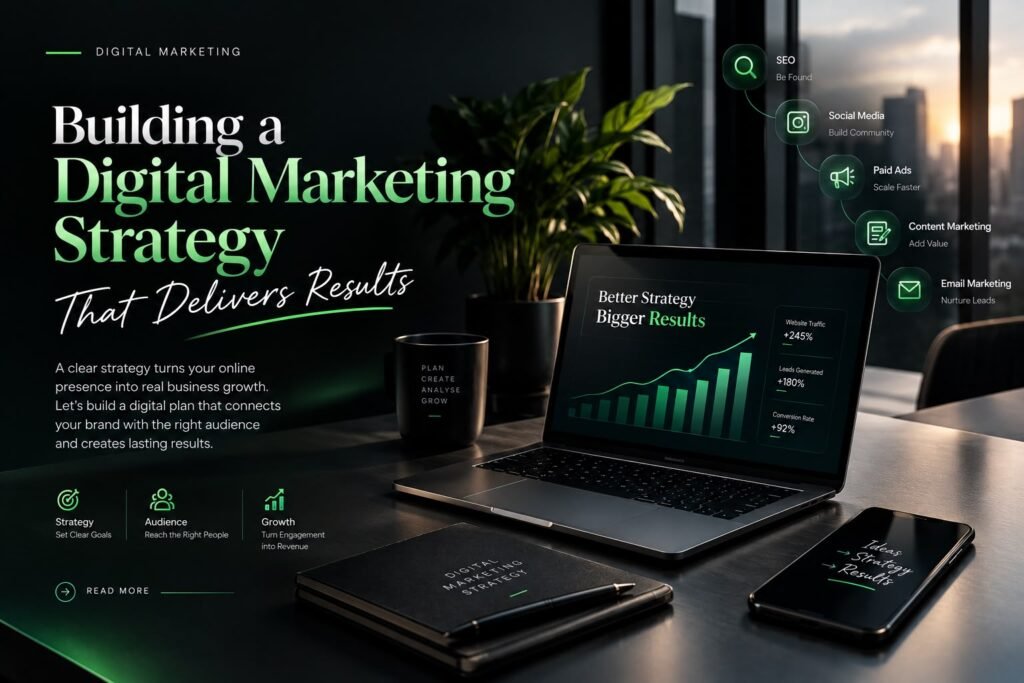
Building a Digital Marketing Strategy That Delivers Results
Digital marketing can open powerful opportunities for businesses, but simply being active online does not guarantee success. Posting regularly, running advertisements, or creating social media accounts is only one part of the process. Real digital growth comes from having a clear strategy that connects every marketing activity to a specific business objective.
A successful digital marketing strategy is not about doing everything at once. It is about understanding who you want to reach, what you want to achieve, how you want to communicate, and how you will measure success.
When these elements work together, digital marketing becomes more than online promotion. It becomes a structured system for building visibility, trust, engagement, and sustainable business growth.
Start With Clear Business Goals
Every effective marketing strategy begins with a clear understanding of what the business wants to achieve.
Your objective could be increasing brand awareness, generating leads, improving website traffic, building an online community, increasing sales, or establishing a stronger position within your industry.
Without clear goals, it becomes difficult to know whether your marketing efforts are actually delivering value.
For example, a business focused on generating enquiries may need a different strategy from a brand that is primarily trying to build awareness. The platforms, content, advertising approach, and performance metrics can all change depending on the objective.
A simple principle is:
Define the destination before choosing the route.
Understand Your Target Audience
A strategy becomes powerful when it is built around the right audience.
Before creating content or launching campaigns, businesses should understand their potential customers — their interests, challenges, needs, preferences, and online behaviour.
Ask important questions:
- Who is your ideal customer?
- What problem are they trying to solve?
- Where do they spend their time online?
- What influences their purchasing decisions?
- What type of content do they find valuable?
Understanding your audience allows you to create communication that feels relevant rather than generic.
The goal is not to reach everyone.
The goal is to reach the right people with the right message.
Build a Strong Brand Foundation
Digital marketing becomes more effective when the brand behind it has a clear identity.
Your visual style, messaging, tone of communication, website, social media presence, and content should feel connected. Consistency helps customers recognise your business and develop familiarity with it.
A strong brand does not only communicate what a company sells. It communicates what the company represents.
This is why branding and digital marketing should not be treated as completely separate activities. Every interaction with your audience contributes to how they perceive your business.
Choose the Right Digital Channels
One of the common mistakes businesses make is trying to be present on every platform.
Being everywhere is not necessarily the same as being effective.
The right digital channels depend on your audience and objectives. For some businesses, SEO and Google search may be essential. Others may benefit more from Instagram, LinkedIn, YouTube, email marketing, or paid advertising.
Instead of asking, “Which platform is popular?”, ask:
“Where is my audience, and where can my brand create the most value?”
This approach helps businesses focus their time and resources on channels that actually support their goals.
Create Content With a Purpose
Content is at the centre of modern digital marketing, but creating content without direction can quickly become repetitive and ineffective.
Every piece of content should have a purpose.
It could educate your audience, solve a problem, demonstrate expertise, build trust, introduce your brand, generate engagement, or encourage an action.
A strong content strategy can include:
- Educational content
- Short-form videos
- Brand stories
- Industry insights
- Customer-focused content
- Case studies
- Tips and guides
- Behind-the-scenes content
The objective is not simply to publish more.
Create content that gives people a reason to stop, learn, engage, and remember your brand.
Use SEO to Build Long-Term Visibility
Search Engine Optimisation plays an important role in creating sustainable digital visibility.
People are constantly searching online for information, products, services, and solutions. A well-optimised website and valuable content can help businesses become more visible when potential customers are actively looking for what they offer.
SEO should be viewed as a long-term investment rather than a quick marketing trick.
Strong SEO combines relevant keywords, useful content, technical website quality, good user experience, and consistent optimisation.
When done correctly, it can help businesses attract relevant organic traffic and create opportunities without depending entirely on paid advertising.
Combine Organic and Paid Marketing
Organic marketing and paid advertising can work together to create a stronger digital ecosystem.
Organic content helps build credibility, relationships, and long-term visibility. Paid campaigns can provide targeted reach and accelerate specific business objectives.
For example, a business may use organic content to establish expertise while using paid campaigns to promote a specific service, offer, or landing page.
The key is not simply spending more on advertising.
The key is making every marketing investment intentional.
Measure What Matters
One of the biggest advantages of digital marketing is the ability to measure performance.
Businesses can track website visitors, engagement, leads, conversions, campaign performance, search visibility, and other relevant metrics.
However, numbers only become useful when they are connected to business goals.
A high number of views may look impressive, but if those views do not contribute to meaningful engagement, enquiries, or conversions, they may not represent real business growth.
Successful marketers look beyond surface-level metrics and focus on the numbers that actually matter.
Optimise, Adapt, and Improve
A digital marketing strategy should never be considered completely finished.
Digital platforms change. Customer behaviour evolves. New competitors appear. Trends develop. What works today may not deliver the same results tomorrow.
This is why continuous optimisation is essential.
Analyse your performance, identify what is working, understand what is not, and make informed adjustments.
The process is simple:
Plan → Execute → Measure → Learn → Optimise → Repeat.
This mindset transforms digital marketing from a one-time campaign into an ongoing growth system.
Turning Strategy Into Sustainable Growth
A powerful digital marketing strategy is ultimately about creating connections between a business and its audience.
It brings together strategy, branding, content, SEO, social media, advertising, analytics, and customer experience under one clear direction.
The strongest strategies are not necessarily the most complicated. They are the ones that understand the business, respect the audience, communicate a clear value proposition, and continuously improve based on real results.
Digital marketing should not be viewed simply as a way to gain followers, increase likes, or generate temporary attention.
It should be viewed as an opportunity to build something more valuable — a recognisable brand, a trusted digital presence, and a sustainable path to growth.
Final Thoughts
Building a digital marketing strategy that delivers results requires clarity, consistency, creativity, and patience.
Start with your business goals. Understand your audience. Build a strong brand foundation. Choose the right channels. Create meaningful content. Invest in SEO and paid campaigns where appropriate. Measure performance and continuously optimise.
Most importantly, remember that successful marketing is not about being everywhere.
It is about being relevant, being consistent, and being valuable at the right moment.
When strategy comes before action, every digital effort has a purpose — and every purpose has the potential to create measurable business value.